Abtsdorf bei Marktschelken
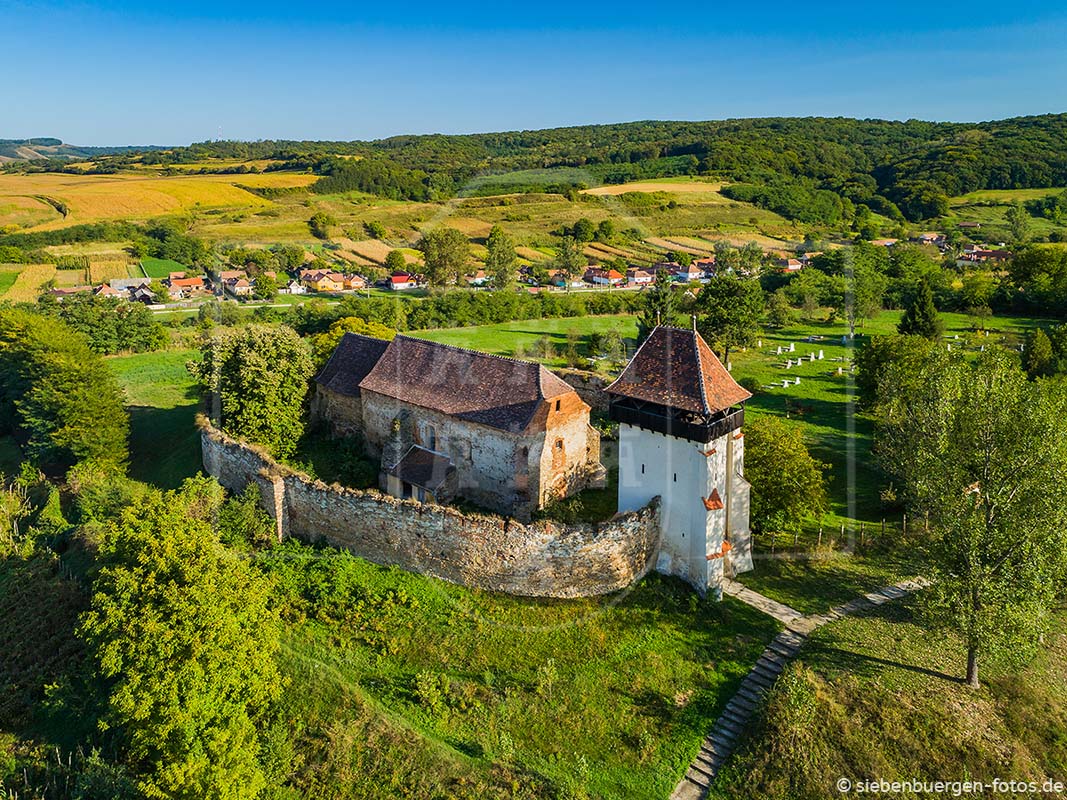
Țapu (German: Abtsdorf bei Marktschelken, Hungarian: Csicsóholdvilág) is a village in Sibiu County in Transylvania, Romania, and part of the commune of Micăsasa (Feigendorf). The village lies in the west of the Transylvanian Basin, in the Târnava Valley along a tributary of the Great Târnava River.
The settlement was first documented in 1309. The village and its inhabitants underwent a lengthy process of changing status. In the 14th century, Abtsdorf was a community under serfdom. Only at the beginning of the 19th century did it become a free commune, following the abolition of serfdom. Existing documents show that in the 13th century the settlement was part of the Egres Abbey, which is why it was then called Villa Abbatis — "the village of the abbey".
In the seventh decade of the 15th century, a document mentions that Țapu and three other villages — Schorsten (Soroștin), Donnersmarkt (Mănărade), and Scholten (Cenade) — were part of a religious association whose deanery was in Scholten (Cenade). These three localities also formed an administrative union.
There were numerous attempts by the Hungarian nobility to break up these administrative-religious unions, but all failed because the union enjoyed royal protection. At the end of the 15th century the villagers were forced by King Hunyadi to abandon their farms. Under King Vladislaus II conditions improved for the inhabitants, as he generally protected the Saxons as a foundational force in Transylvania. Later, in the mid-17th century, these four villages came into the possession of Prince Gheorghe Rákóczi II. At the end of the 18th century they were granted by Maria Theresa to Count Teleki.
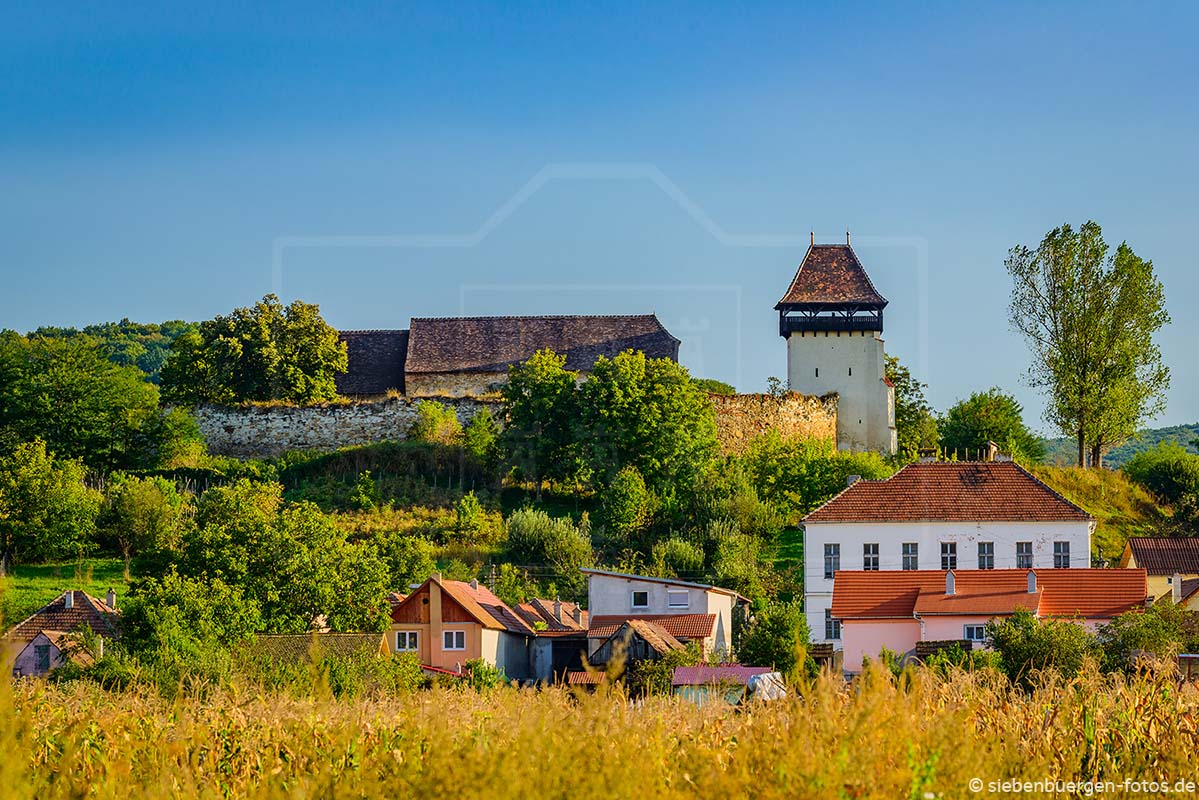
The hall church stands on a hill and is surrounded by an oval enclosure. Built from quarried stone, the church dates from the 15th century, as evidenced by its late-Gothic stylistic forms. The long, narrow chancel is divided by two broken arches into a cross-vaulted square and a pentagonal apse. As with the churches of Frauendorf (Axente Sever) and Arbegen (Agârbiciu), there was an attempt to build a tower over the chancel — proven by the thickness of the existing walls. Financial shortfalls prevented the project from being realised. On the northern wall of the chancel one can still see a tabernacle niche with a beautiful baldachin.
In 1625, the nave windows were converted to rectangular forms, the side portals with pointed arches were erected, and buttresses were built to support the church walls. In another construction phase the sacristy was added on the northern side of the chancel. In 1838 the north portal with its portico was added.
The fortification consists of river and quarry stone, six metres high with two wall-walks. Traces of the moat watch can still be seen today. To the west is the entrance, beneath a three-storey tower supported by buttresses. In 2010 the gate tower was renovated with the help of the Heimatortsgemeinschaft Abtsdorf (http://www.abtsdorf-hog.de/).
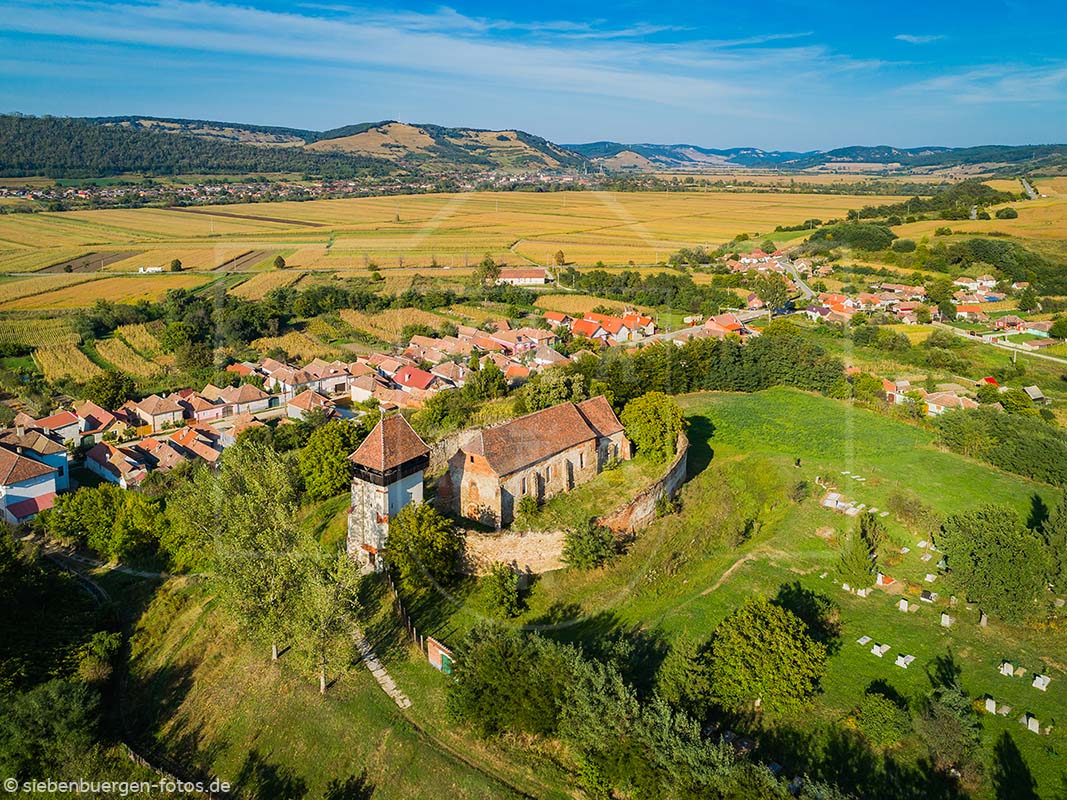
On the inside of the enclosure, various storage chambers for beverages, grain, fruit, and smoked meat could be seen until 1941. Similar chambers were also built along the north wall of the church in the 19th century, with the additional function of fire protection. Until 1852 there was a small chapel on the grounds for Catholic worshippers. The chapel was demolished and a school was built from the resulting materials.
The people of Abtsdorf were known for the custom of organising Carnival festivities among the four neighbourhood communities. These neighbourhoods were not only responsible for organising Carnival but also for distributing maintenance tasks for the church and the village.
At the beginning of summer a study trip to the Kokel Valley (Link) took place, where six young people reported on the current state of the village.
Author:
Zîmța Andreea
Date: 04.10.2017
For photos from Abtsdorf, please click: Photos from Abtsdorf