Heltau
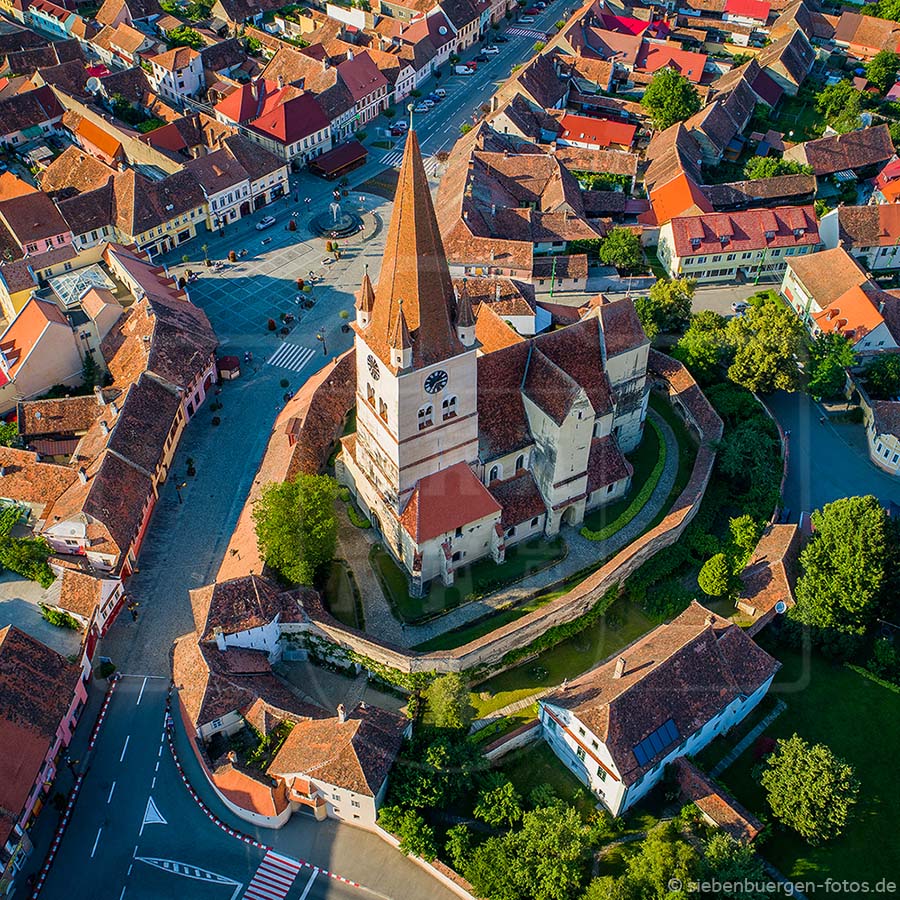
The first tower clock in Transylvania, countless Turkish invasions, Wallachian raids, a plague epidemic and the textile industry shaped the history of Heltau.
Folk legend tells that the Transylvanian Saxons found their way to Transylvania of their own accord. In their homeland there were famines and epidemics, forcing them to leave, yet at the same time they were called to defend the borders and to develop the land.
After the founding of the settlement of Hermannsdorf (Hermannstadt), the group of settlers split up. Some went as far as Broos, others as far as Draas, and some also as far as Heltau.
The Transylvanian Saxons founded Heltau and inhabited the village for centuries. They received privileges and rights, especially after the granting of the Golden Charter. The young settlements developed rapidly. Only through strict rules and the observance of customs was the cohesion and survival of the Saxons possible. All Transylvanian-Saxon villages were built according to certain rules, a distinctive feature that can still be seen today. Since the landscape was shaped by Turkish invasions that caused great devastation, the Saxons had to use their houses of worship as places of refuge. They built defensive walls equipped with walkways and watchtowers, so that these structures became known as "Kirchenburgen" (fortified churches).
These fortified churches define the image of Transylvania. One of the most beautiful and interesting fortified churches in Transylvania is the Heltau fortified church. The church was built in 1300 in the Romanesque style and its patron saint is Saint Walburga. A hundred years later, the people of Heltau could look with great pride at their tower clock, as it was the first tower clock in Transylvania. After the Turkish invasion of 1439, the complex was further expanded with defensive towers, a second wall and a moat. The Transylvanian Saxons fortified the church with defensive towers located above the choir, the apse and both side aisles. Nearly a hundred years later, the tower received four corner turrets, which are said to symbolise the right of high justice of the town. This, however, was never the case.
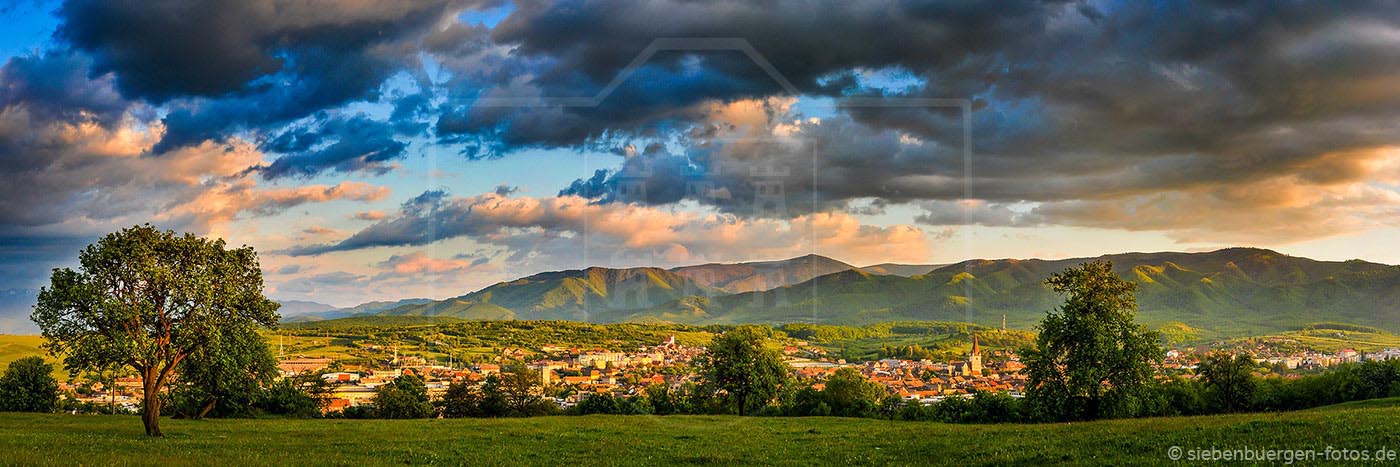
The people of Heltau managed to drive out the Turks, but against one enemy they were powerless: the plague, which claimed the lives of 411 Heltau residents.
For the people of Heltau, their church treasure was a great help but also a well-guarded secret. Only the church elders knew where the treasure was kept. After lightning struck the church and tower several times, the people of Heltau had to sell part of their treasure to have a lightning rod mounted on the church tower spire. Once again they could be very proud, as they now possessed the first lightning rod in Transylvania.
What remained of the church treasure can today be viewed in the Brukenthal Museum in Hermannstadt.
95% of the Transylvanian Saxons left the country after the fall of communism in 1989, so that in many villages there are no Saxons left. These communities are now looked after by the district consistories of the Evangelical regional church.
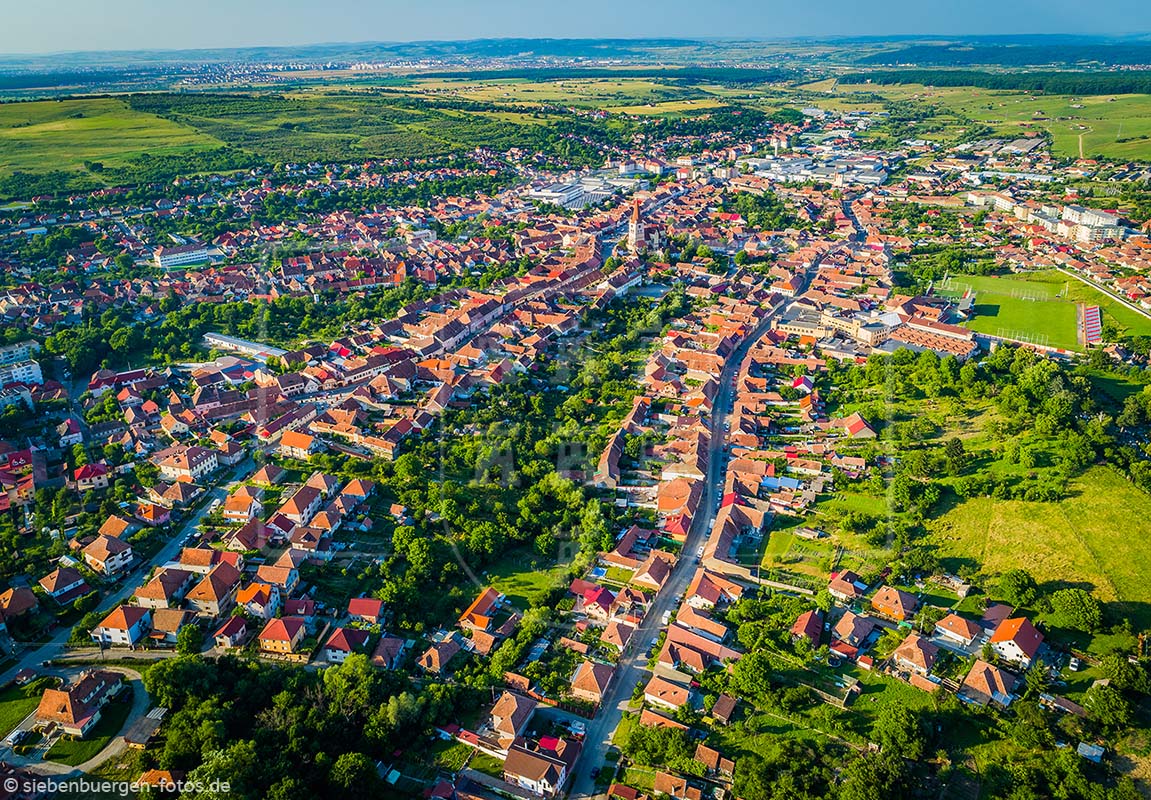
It is not known exactly how many Transylvanian Saxons still remain in Transylvania. Each year the "soul count" of the 264 congregations is reported — meaning the number of church members — but this does not correspond to the actual number of Transylvanian Saxons.
Heltau is a large congregation with 350 members. The congregation holds worship services every Sunday at 10 o'clock in the Evangelical church. On the major church holidays, various events take place within the castle walls, such as open house day, castle festival, Mother's Day, Night of the Castle, etc., organised by the active Heltau church congregation.
360° Panorama
Panorama 1Panorama 2Panorama 3Panorama 4Author:
Zîmța Andreea
Date: 26.06.2017
For photos from Heltau, please click: Photos from Heltau