Fogarasch
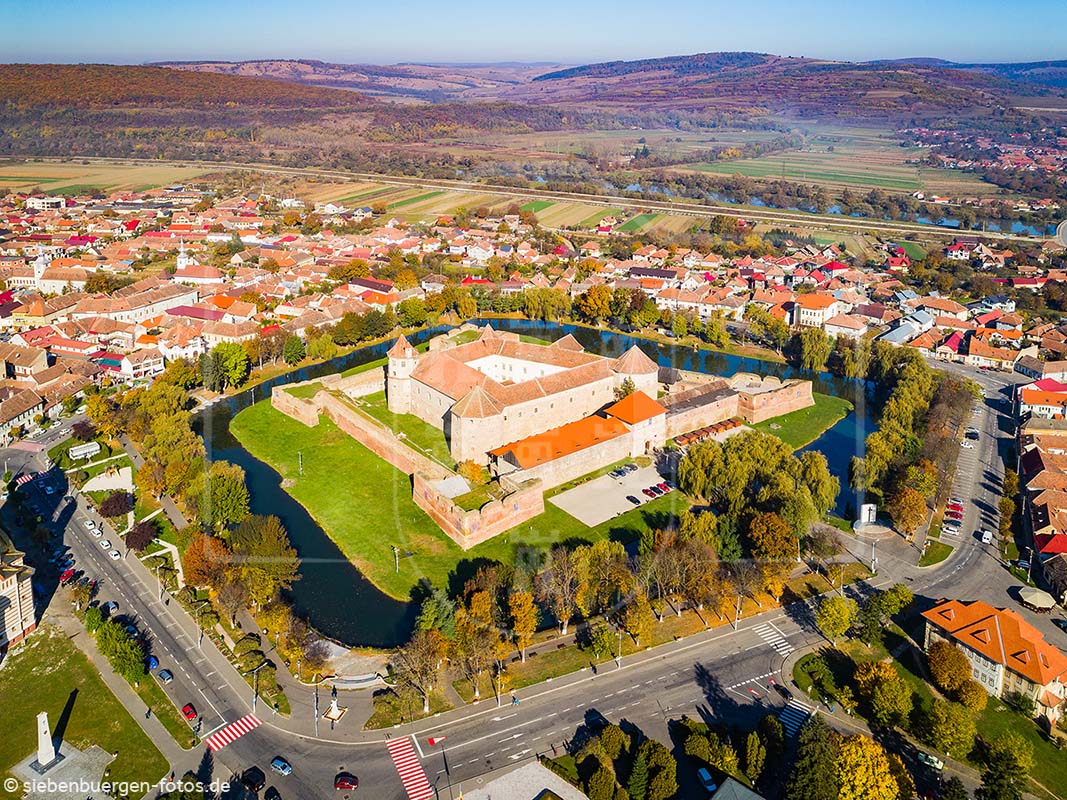
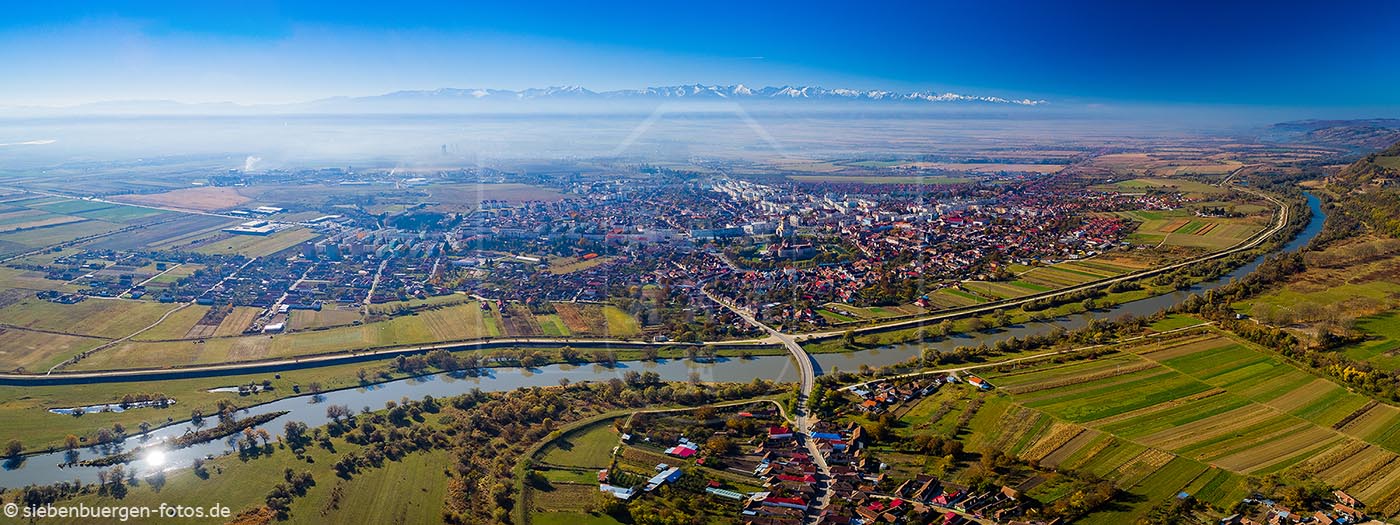
Fogarasch (Romanian: Făgăraș, Hungarian: Fogaras, Transylvanian Saxon: "Fugresch") lies in Brașov County in Transylvania, Romania.
The settlement at the foot of the Făgăraș Mountains was first documented in 1291 under the name "Fogoros". The etymology of the word may be Hungarian — "fogor" (a variant of "fogoly") or "fogoros", meaning "a place with many partridges". Whatever the etymology, the Romanian and German forms are adaptations of the Hungarian name.
Geographically, the town of Fogarasch lies in the Făgăraș Land, one of the oldest and most important geographical and ethno-cultural areas in Romania, also known as the Altland.
When speaking of Fogarasch, one immediately thinks of the famous Fogarasch Fortress. The history of this fortress is marked by many changes that took place under various princes.
Construction of the fortress began in 1310 on the site of an earlier earthen and wooden structure (12th century). The construction was strategically vital, particularly for defending the south-east of Transylvania against Tatar and Ottoman incursions.
In 1526, Stefan Mailat, the son of a local nobleman, became Prince of Transylvania. He took possession of Fogarasch and the surrounding territories. Under his rule the fortress was transformed into a proper stronghold. The defensive walls were doubled from within. New rooms were fitted out in vaulted halls. In 1541 the Ottomans, led by Mustafa Pasha, attacked the fortress. Mailat was lured into an ambush and was held prisoner in the Seven Towers Prison (Yedikule) in Constantinople, where he died ten years later.
In 1599 Michael the Brave occupied the fortress and gifted it, along with its estates, to his wife Stanca. When he became Prince of Transylvania, he brought his entire family into the fortress together with the princely treasury.
Eighteen years later the last two storeys of the south-west tower (the donjon, also called the Red Tower) were built, bringing it to five storeys. In the 17th century Fogarasch, with brief interruptions, was a true capital of Transylvania, and its fortress served as the residence of the Transylvanian princes. The Transylvanian Diet convened here a total of eleven times.
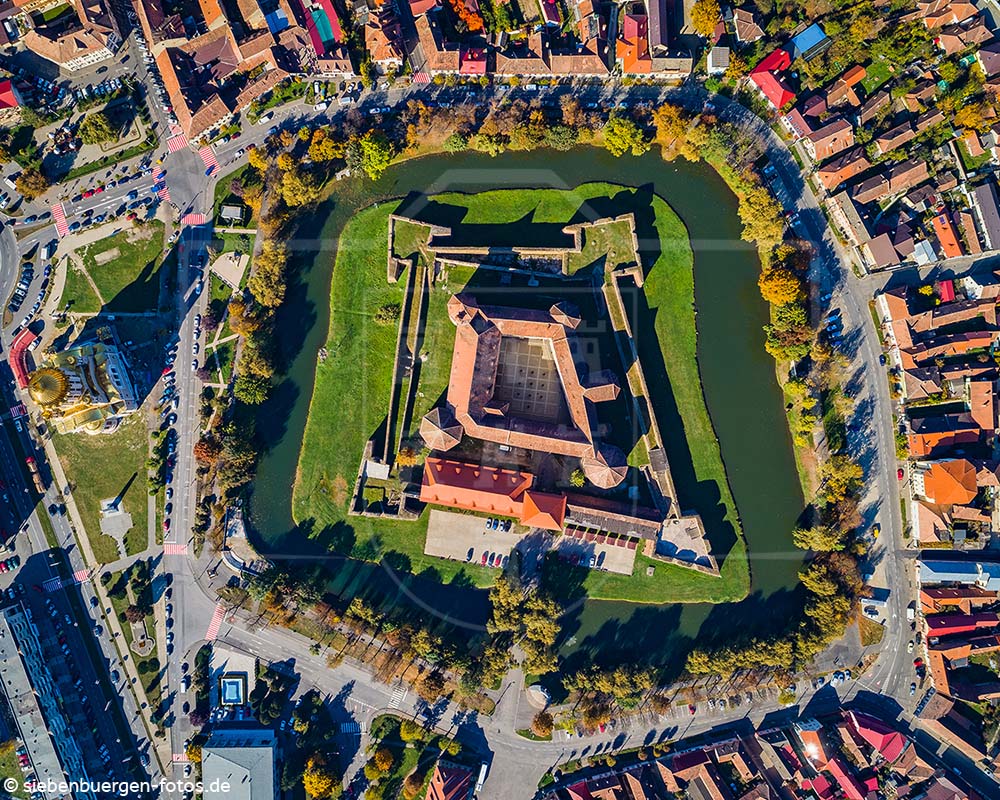
In 1630 the defensive moat surrounding the fortress was enlarged and connected to the Olt River via a secret canal. A drawbridge was built at the entrance. Later, the cellars were renovated — these had served as dungeons for rebellious serfs.
The first school in Fogarasch was founded in 1657 by the mistress of the fortress, Zsuzsanna Lorántffy, wife of Prince Gheorghe Rákóczi I. The language of instruction was Romanian and it was under the patronage of the prince.
After Transylvania became part of the Habsburg Empire in 1669, the fortress was taken over by the Austrians and converted into a barracks and military prison.
In the 17th century Fogarasch became the seat of the Greek Catholic bishop (Episcopia Română Unită cu Roma). The bishop's residence was on the first floor of the south wing of the fortress. Bishop Ioan Giurgiu Patachi preferred to reside in Brukenthal Castle in Sâmbăta de Jos, and Inocențiu Micu-Klein moved his episcopal residence from Fogarasch to Blaj in 1737, through a real-estate exchange.
Nicolae Iorga visited the fortress in 1903, when it was nearly a ruin. Between 1948 and 1960 the fortress served as a prison for opponents of the communist system in the Făgăraș region — political prisoners. Fogarasch thus became one of the prisons in the Romanian Gulag system.
In the following years (1965–1977) repairs, restorations, and conservation work were carried out. According to the museologist Horia Pirău, the fortress was besieged 26 times but never opened its gates. The architecture corresponds to the Italian Renaissance style. The structure and form of the Fogarasch Fortress do not match the style of typical Transylvanian fortresses. Transylvanian fortresses were usually built in star-shaped, Vauban style; the Fogarasch Fortress instead has the form of an irregular quadrilateral. On the north-eastern side — the longest side of the fortress — stands the prison tower, which offered excellent panoramic views. The throne room is also magnificent. Located on the second floor, it was renovated a few years ago. Here stands a throne along with the coat of arms of the town of Fogarasch, featuring two fish. There is also the hall of the Transylvanian Diet, whose furniture dates from the 17th century — they are reproductions. One must not forget that the fortress was used as a prison from 1948 to 1962, during which time many objects were lost.
Every August a castle festival takes place — a medieval fair lasting three days. Journalists from the Huffington Post compiled a list of the 10 most beautiful castles in Europe, and the mighty Fogarasch Fortress came in second place. The fortress is visited by over 100,000 tourists every year, with information available in English, German, and French. Revenue from ticket sales is used for restoration work.
At present the fortress houses the "Valer Literat" Museum of the Făgăraș Land and the municipal library. There is also a school with German as the language of instruction in the town.
The Evangelical congregation of Fogarasch, with over 280 members, is one of the larger congregations of the national church. In addition, the Fogarasch pastor also serves the congregations of Bekokten, Rohrbach, Scharosch bei Fogarasch, Schirkanyen, and Seligstadt.
Author:
Date: 21.03.2018
For photos from Fogarasch, please click: Photos from Fogarasch