Arkeden
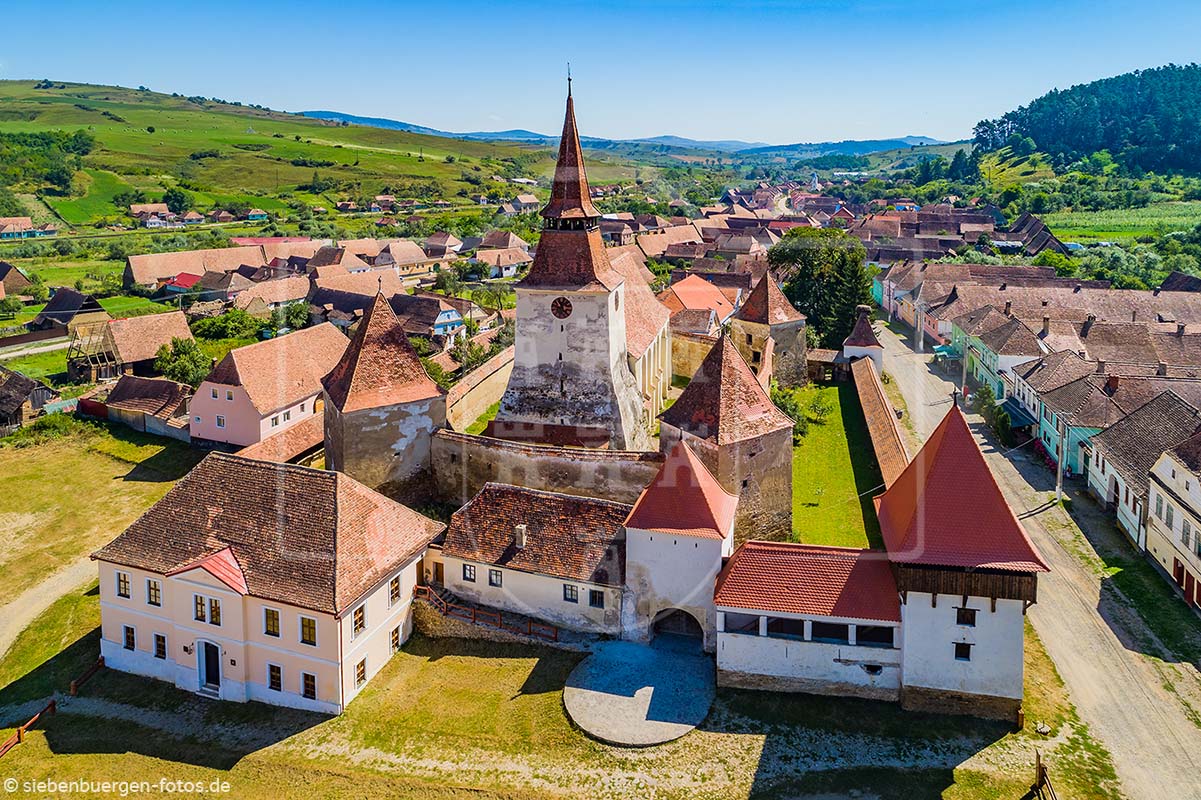
Arkeden (Romanian: Archita, Hungarian: Erked, Transylvanian Saxon: Ärkeden) is located in Mureș County, in Transylvania.
The origin of the German place name is relatively unclear. According to local legend it derives from the Arkeden village dialect expression "er küt" ("he comes"). Other sources suggest it may be borrowed from the Hungarian word erek (passage, vault, arch), while the name could also derive from the personal name Archo.
Arkeden is first documented in 1356. It is believed that the settlers who founded the village around 1200 came from the area of the Reps (Rupea) chair. For almost 700 years Arkeden was an independent commune. It gained freedom through the Andreanum (1224), and since 1968 the village has been part of the commune of Teufelsdorf (Romanian: Vânători).
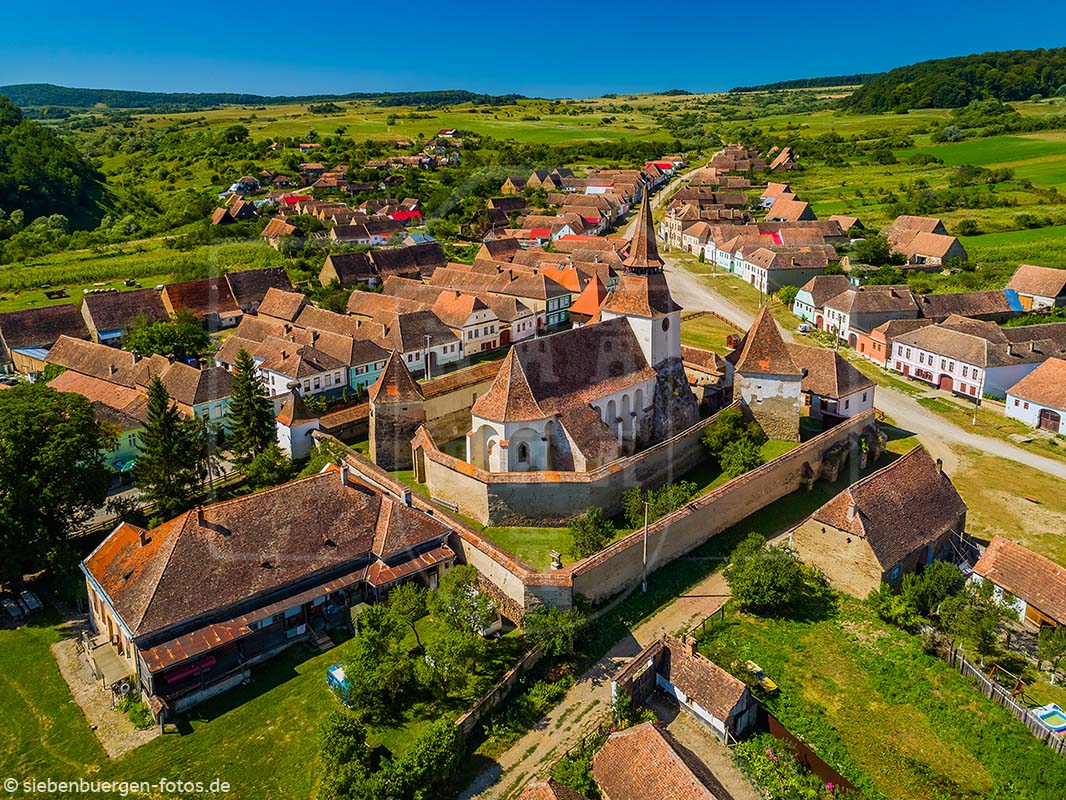
Until the mid-17th century Arkeden was a purely German-speaking commune. Later, Roma, Romanians, and a few Hungarians settled there. The Roma settled on the hill above the commune, founding the "Ziganie" quarter. The Saxons lived in the village centre, where the fortified church stood; the Romanians lived around the centre, and later a new street (Witschgasse) was built. Today no Saxons remain in Arkeden, but the well-preserved fortified church stands as a reminder of the Saxon cultural heritage.
The original church of the village was a tower-less Romanesque pillar basilica from the 13th century. A western bell tower was added in the 14th century. In a second construction phase (around 1500), after the side aisles were demolished, the basilica was converted into a Gothic hall church with defensive structures. (Source: HOG Arkeden.) Of the original nine bastions, only seven survive today. The village experienced four major fires: in 1748, 1814, 1848, and 1883. The present form of the fortified church dates from after the first fire.
The church interior is impressive. On the double-storey western gallery stands the organ of the significant organ builder Samuel Maetz, dating from 1824. Master Philippi from Schäßburg (Sighișoara) built the high-Baroque altar in 1752, and eleven years later he created the pulpit.
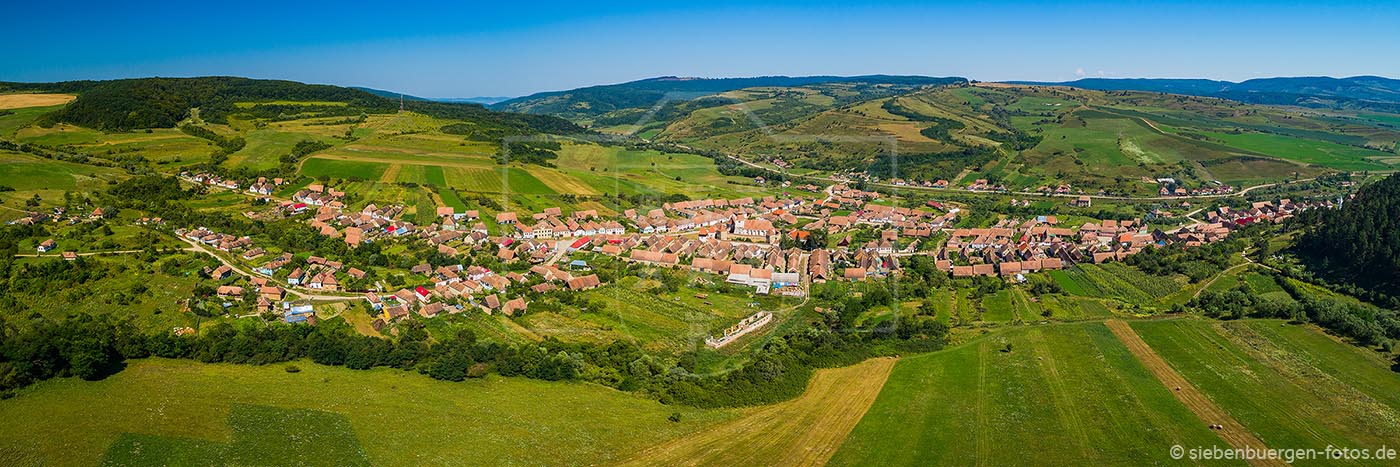
From the bell tower one has an excellent view of the hilly, picturesque surroundings of Arkeden. Somewhere among these hills lie the remains of the village of Wordt, which was wiped out by the plague. Sadly, no one today can recall the exact location of the ruins.
Between 2010 and 2014 the fortified church was renovated within the EU project "18 Kirchenburgen" (18 Fortified Churches), carried out by the Consistory of the Evangelical Church A.C. in Romania.
Author:
Zîmța Andreea
Date: 16.04.2018
For photos from Arkeden, please click: Photos from Arkeden