Wurmloch
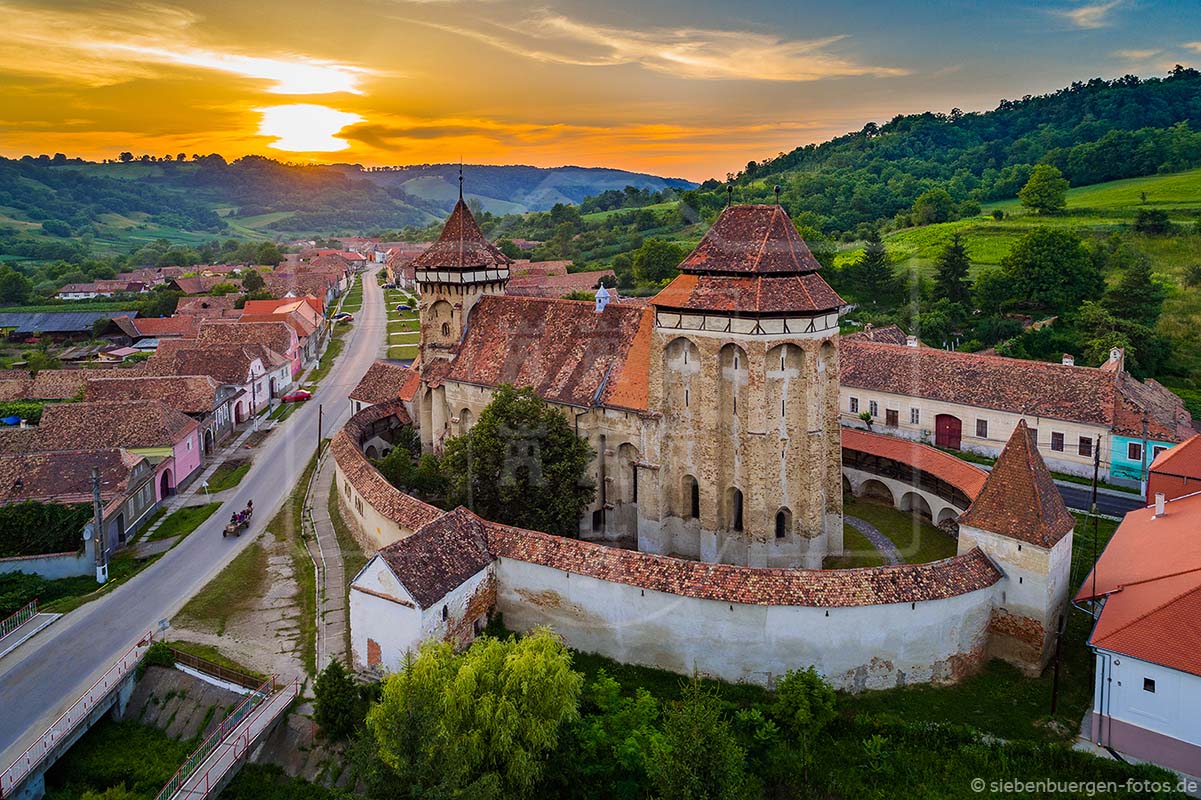
Wurmloch (Romanian Valea Viilor or Vorumloc, Hungarian Nagybaromlak) is a municipality in Sibiu County (Hermannstadt).
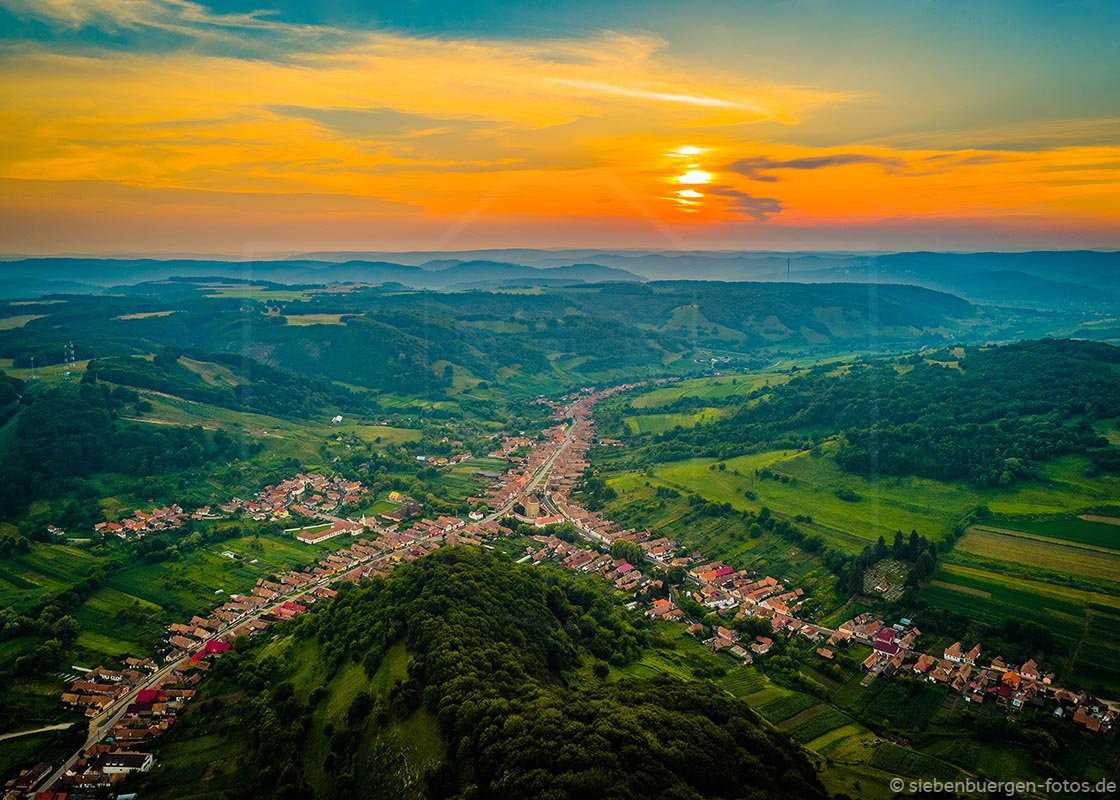
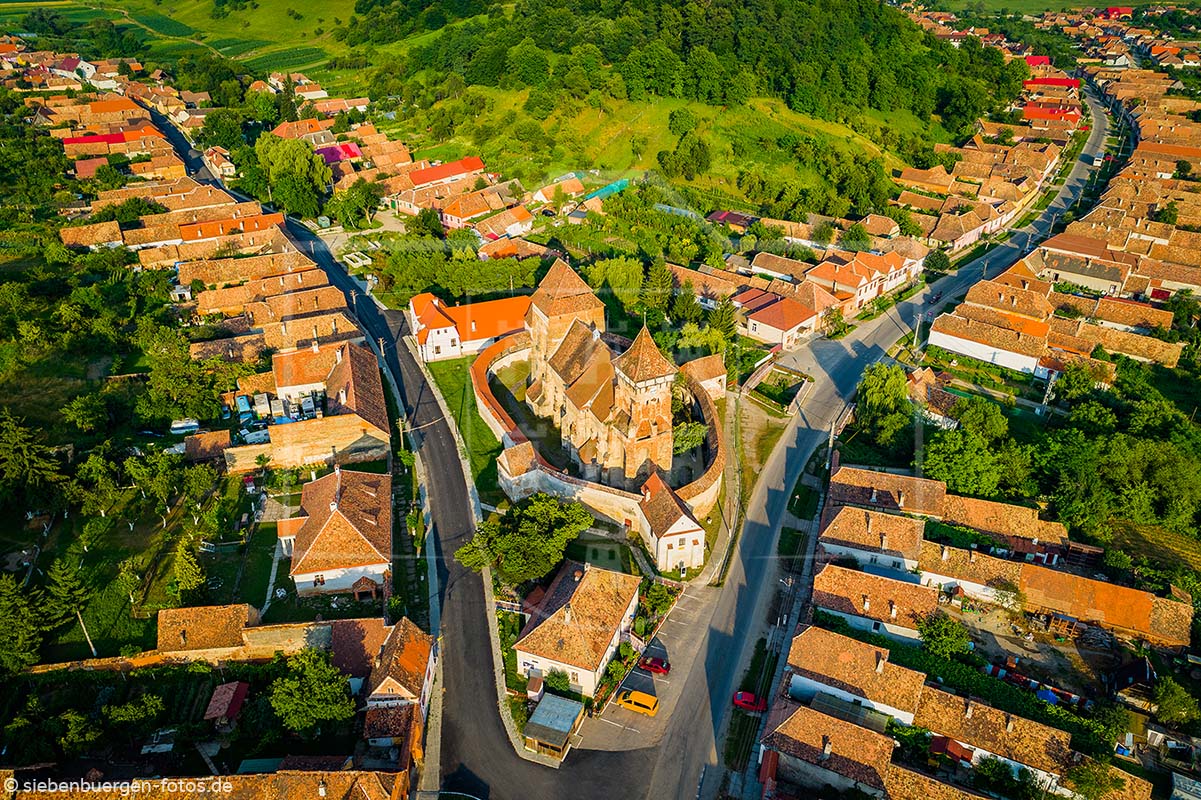
The village is situated in a hilly landscape of the Târnava valley, south of the small town of Copșa Mică (Kleinkopisch), and is crossed by a tributary of the Great Târnava. At the intersection of the three main lanes stands the magnificent and imposing fortified church.
The first documented mention was in 1224 or 1305, when the Hungarian count Apafi bequeathed the village to his son. Later, Wurmloch became a Transylvanian Saxon serf village and afterwards was able to join one of the seven seats (the Mediasch Seat) and become free. For many years the village was known under the name Vorumloc until it was renamed Valea Viilor (Valley of the Vineyards). The German name "Wurmloch" comes from Middle High German and is composed of the words "Urm" (snake) and "Loh" (forest), meaning "snake forest". Unfortunately the reason why the village received this name remains a mystery.
In the 14th century the church was built and dedicated to Saint Peter. During archaeological excavations, a predecessor building was discovered in the area of the sacristy. Like other communities and churches, the church was built in Gothic style. It takes on its present appearance only at the end of the 15th and beginning of the 16th century. During this period the church was reinforced for defence. The nave and the choir were considerably enlarged and connected by a triumphal arch. The still-visible undivided Gothic windows were also built during this construction phase. The choir is expanded into a tower and receives three brick defensive storeys. The fourth storey rests on circular-segment arches vaulted between the buttresses. The uppermost storey has a half-timbered parapet and an open defensive walkway. (Fabini, booklet 8)
The roof structure served for observation. The men could move from one defensive storey to another via block stairs. In the defensive storeys the arrow slits and their niches are still visible today. The village was attacked many times and therefore the church was repeatedly strengthened. The church passages are protected by portcullises, the west portal was bricked up and the tower encased. The massive buttresses that the tower received later served for the installation of the staircase to the organ. The bell tower is impressive for its numerous and varied defensive systems. On the south side of the tower, remnants of frescoes are still preserved. The twin windows on the fourth upper storey of the bell tower may have been created before the last renovation. The defensive installations around the tower are inventive and diverse, giving the tower its characteristic appearance — for example the projecting defensive storey with half-timbered parapet on the fifth tower level.
Simultaneously with the reconstruction of the church, the ring wall around it was also renewed. The 6–7 metre high walls still contain visible arrow slits and machicolations. A two-storey gateway protected by a portcullis was built to the west; on the south, north and east, two bastions and a tower were constructed. At the beginning of the 18th century, granary chambers were added inside and outside the ring wall.
The interior contains a Baroque altar from 1779; its paintings are works by Stephan Folbarth from Schäßburg (Sighișoara). The Apostle Paul flanks the central crucifix on the right side, and the Apostle John with an eagle on the left. On the predella the Last Supper is depicted, and the overall composition is crowned by the Eye of God. The pews from 1528, created in the transitional period between Gothic and Renaissance, have been preserved.
The village had difficulties not only because of the many attacks, but also because of a rivalry between Wurmloch and Mortesdorf, similar to the one between Heltau and Michelsberg.
But all these difficulties did not prevent the simple villagers from building a remarkable fortified church.
Author:
Zîmța Andreea
Date: 12.09.2017
For photos from Wurmloch, please click: Photos from Wurmloch