Großalisch
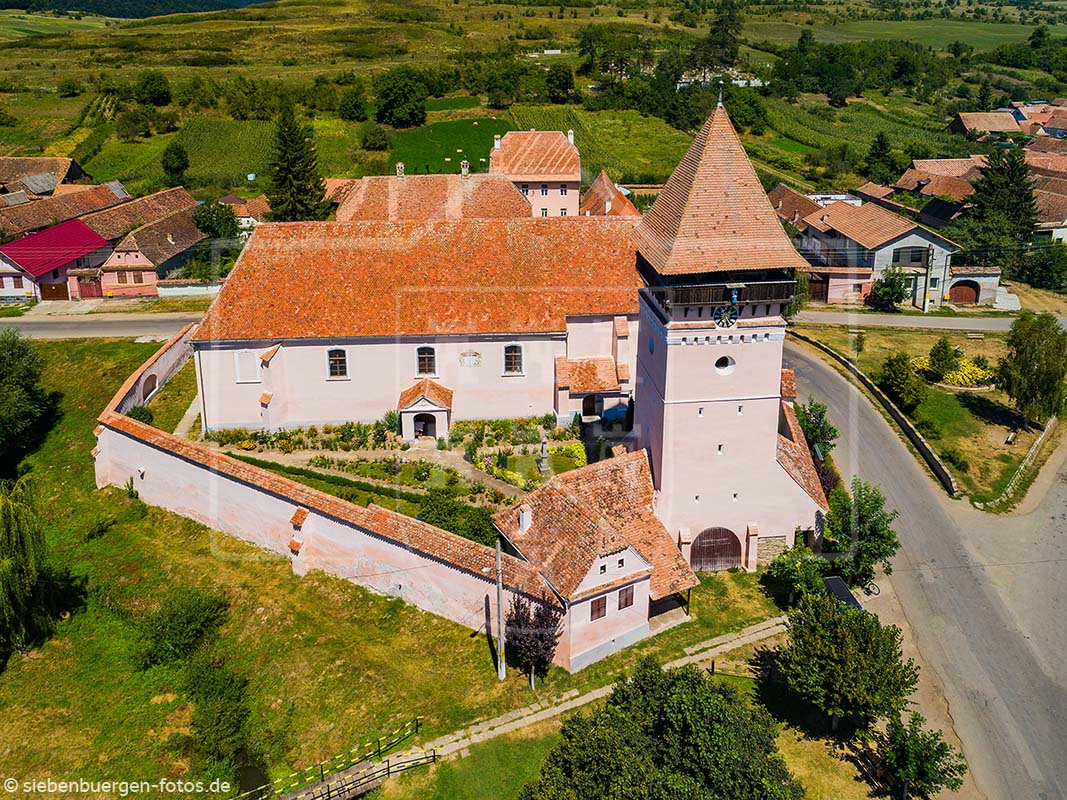
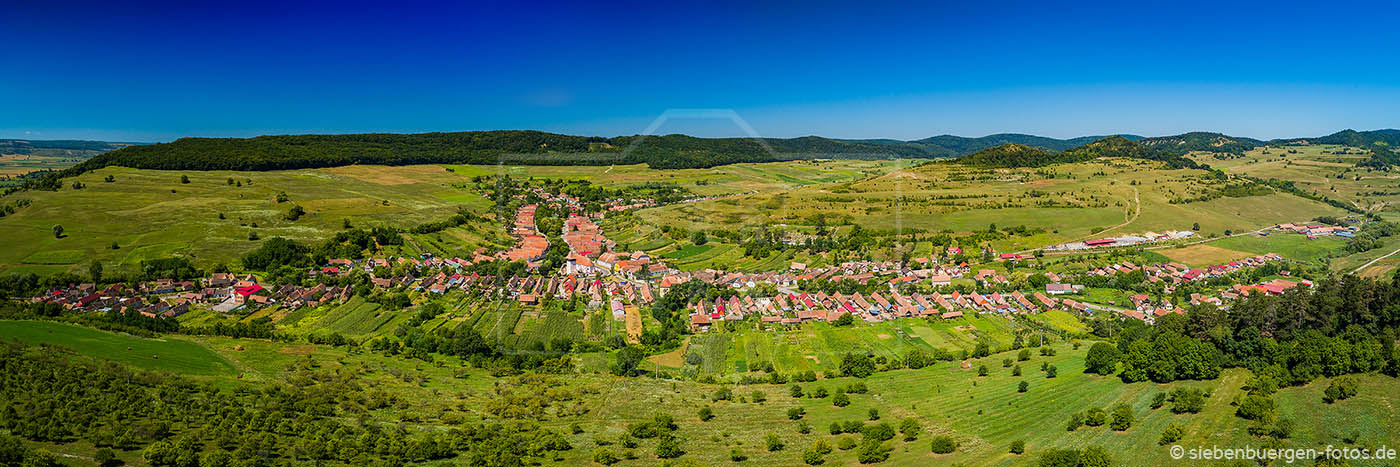
Großalisch, Romanian Seleuș, Hungarian Nagyszöllős, Transylvanian-Saxon Griisålesch, is located in Mureș County in Transylvania, Romania.
The Transylvanian-German settlement has been documented under various names. First (1348) under the name Scewlews, and later as (1393) Ewluesch, (1411) Zewlws, (1432) Ewlesch, (before 1500) Halws, (after 1501) Nagy-Zeuleus, (1526) Ewlysz, (1532) Gross-alysz, (1661) Szölös, (1804) Gross-Szölös.
The Hungarian word "szöllös" (German: Weinholde, meaning vineyard) is probably the root form of the name and reflects the location of the settlement. This word was then adapted by the Transylvanian Saxons into "Zalesch" and ultimately into the name Alisch.
The settlement received the prefix "Groß" (Great) due to its proximity to the Greater Kokel river. Many stories are told about the past of the village of Großalisch. They can still be felt today on a walk that passes the Silver Well, the Tear Well, and Murderer's Hill. According to local tradition, all these names trace back to an old tale: once, two brothers found a treasure at the so-called Silver Well. Their brotherly affection quickly turned to hatred, and finally one of them killed the other on Murderer's Hill. Horrified by his own deed, he fled through the nearby meadows and forests, finally collapsed from exhaustion and wept ice-cold tears — right at the spot where the Tear Well is found today. The escape route he took was then named Wünichhill. On this hollow path, lumps of clay said to have fallen from the fugitive's shoes can reportedly still be found today. (Kirchenburgen.org)
The truth is, however, that the village and its population were not spared from misfortune and blows of fate. Several major fires, which destroyed half the houses, and several outbreaks of livestock disease were among the many hardships the people of Großalisch had to endure. But the people were not discouraged and managed within a century to become the most populous community of the Schäßburg Chair.
Their prosperity lasted until the beginning of the 17th century. The wars between the Wallachian voivode Michael the Brave and the Hungarian princes Basta, Moses Székely, Bocskai and Gabriel Báthory devastated the village. According to some historians, these wars were more terrible than the Tatar and Turkish invasions.
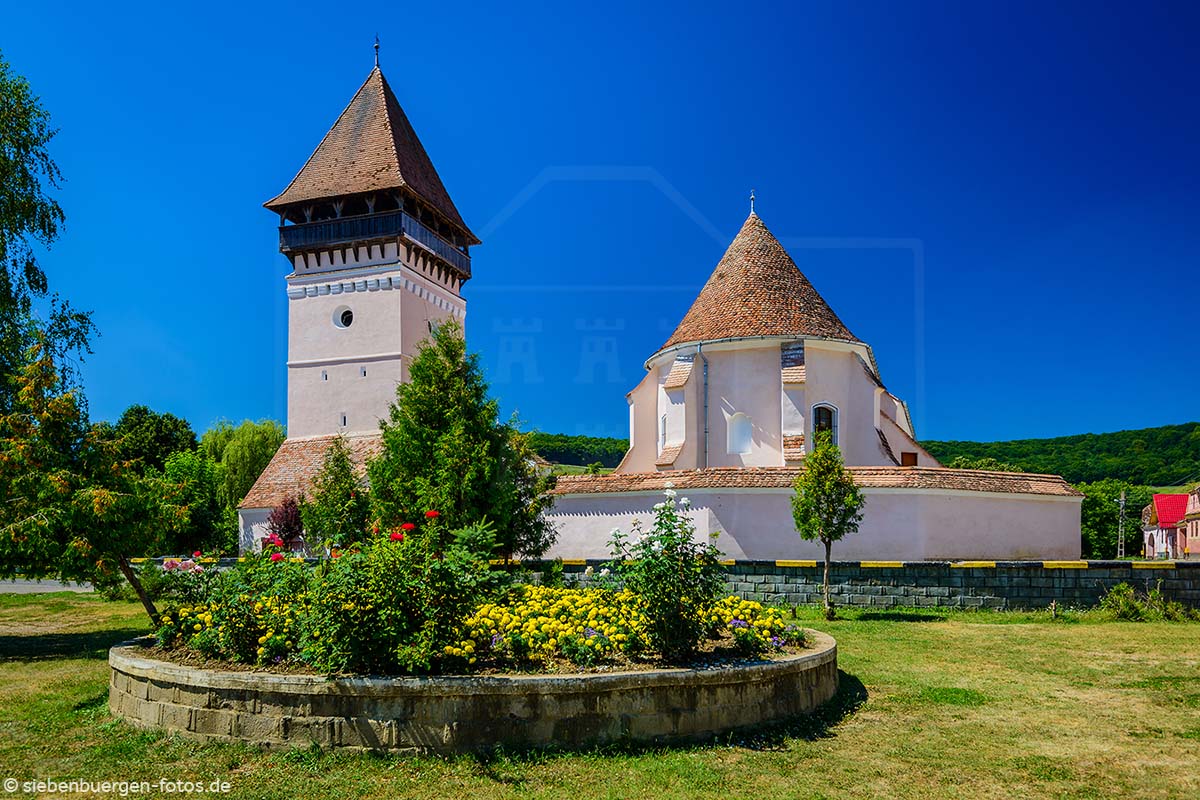
The one thing that could not be taken from the villagers was their faith. In 1476, a hall church with a three-sided closed choir was completed, and only 27 years later it was converted into a fortified church. It received its present form at the beginning of the 19th century after many renovations.
Inside, curious visitors will find a Baroque altar painted by the painter Andreas Maler from Schäßburg (1713), a wooden pulpit (1823), an impressive classicist choir stall, and an organ installed by an organ builder from Kronstadt. The strict seating order of the Transylvanian Saxons is vividly conveyed by the interior with galleries for the men, pews where women sat according to age, and the choir reserved for confirmands and presbyters.
Outside the church, built into the ring walls, stands the mighty two-storey bell tower with corbelling from the 16th century and a wooden defensive walkway covered by a pyramidal roof. The Großalisch congregation owns two pre-Reformation bells. The large bell dates from the 14th century and the small bell dates, according to inscriptions, from the 15th century.
The officers' quarters (1754), built for the imperial occupation troops, were renovated at the beginning of the 20th century and fitted out as the village inn. It was later converted into the Romanian state school.
In the same period an emigration wave to America began. Time has left heavy traces on this community. The HOG Großalisch worked for fifteen years to ensure the church could shine in new splendour. The reason it took so long was that experts considered the church uninteresting. In September 2015 the rededication of the fortified church took place, to which 120 people from Großalisch came from Germany.
With 65 congregational members, Großalisch is one of the larger church communities in the region. Today it is spiritually served together with the Schäßburg city pastor.
About the rich history of the village and the fortified church, curator Elfriede Hermann can be a guide.
For photos from Grossalisch, please click: Photos from Grossalisch