Deutsch-Kreuz
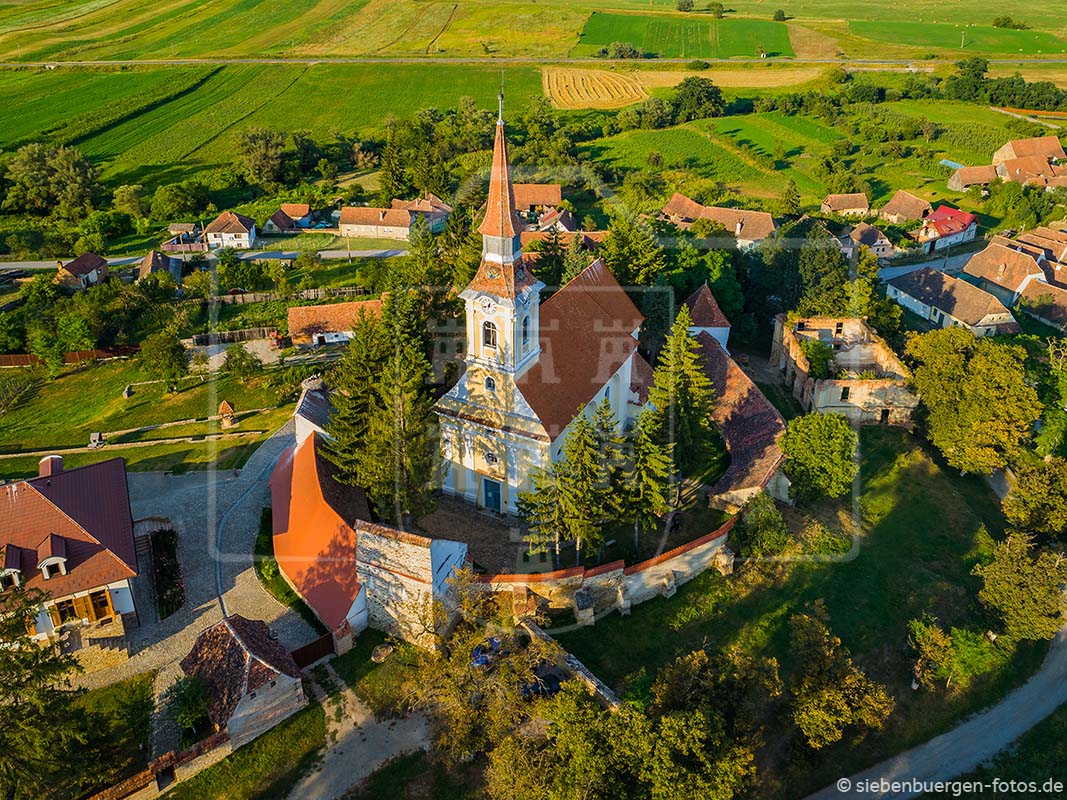
Deutsch-Kreuz (Romanian: Criț, Hungarian: Szászkeresztúr, Transylvanian Saxon: Kroiz)* lies between the two economically and touristically important centres of Schäßburg (Sighișoara) and Kronstadt (Brașov), in Brașov County in Transylvania, Romania.
The earliest written records date from 1270–1272, when Deutsch-Kreuz was in the possession of the Abbey of Kerz (Cârța). The Transylvanian Saxons formed the majority of the village population for centuries.
In 1593 the first village school regulations in Transylvania were drawn up in Deutsch-Kreuz — one of the most valuable documents in history. It is rightly regarded as the most interesting Saxon village school statute and shows how the humanistic educational ideal, and the enthusiasm for ancient languages and the knowledge conveyed through them, radiated outward into the village schools. It can be demonstrated that "graduates" of these village schools went directly on to university. — Johann Imrich, Chairman of HOG Deutsch-Kreuz e.V.
The fortified church of Deutsch-Kreuz stands on a hill within the village. The present church was built in the classical style in 1810, after the previous building was demolished. Little is known about the appearance of the earlier church. The interior furnishings consist of the organ-altar, pulpit, and baptismal font. The outer ring wall and the four towers from the 15th century are still preserved. A fifth tower collapsed in 1925 and was not rebuilt.
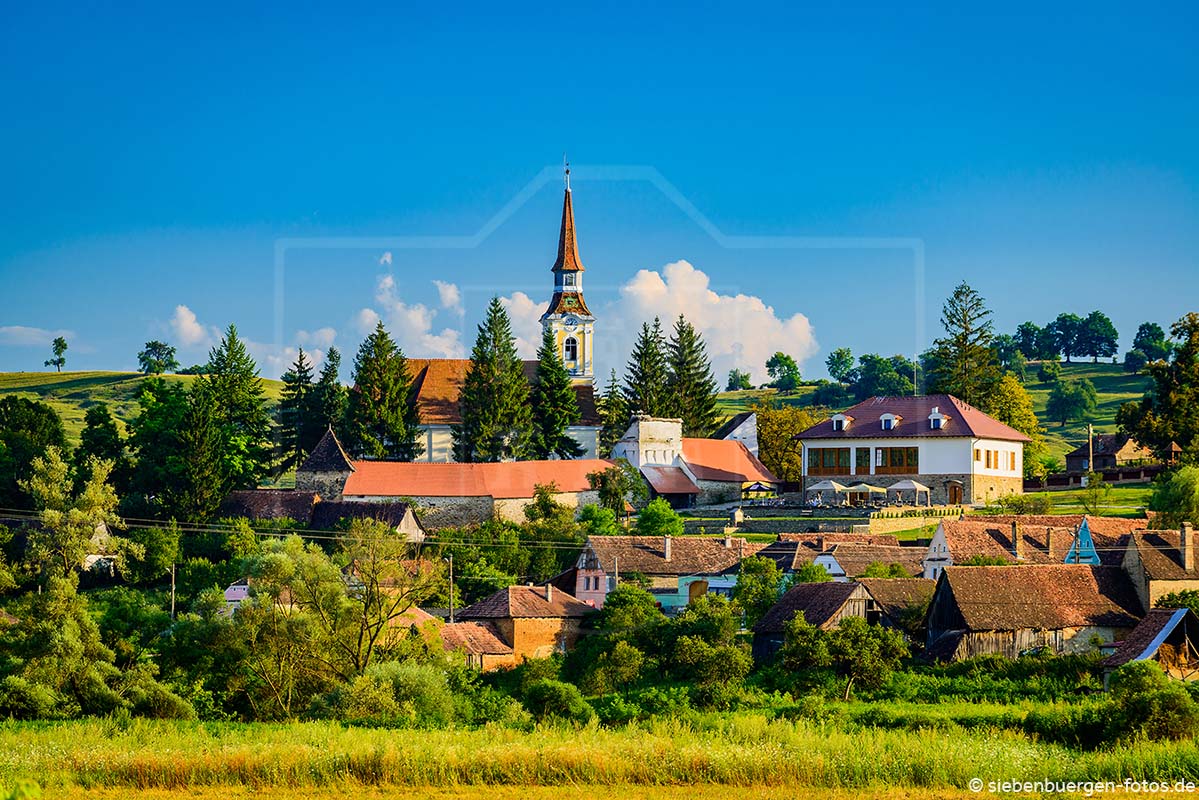
On the south side of the fortification the ruins of the old school can be seen.
The ascent to the church is somewhat laborious, along a path of rounded river stones. Particularly on Sunday mornings, women frequently found their heels — which in those days were still fitted with horseshoe tips — breaking off on the way to church. For this reason a cobbler had to stand ready on the spot to carry out emergency repairs before the church service. The fortified church, together with the largely historically intact village, lies in a dreamy hilly landscape that invites walks to neighbouring villages and other fortified churches. Overnight accommodation is available in the village in several lovingly restored farmhouses. (Source: Kirchenburgen.org)
Many believe that Deutsch-Kreuz will be the next Weißkirch (Viscri). The Michael Schmidt Foundation works to preserve the authentic charm and character of the Saxons in the village. The Saxon houses and farmsteads have been carefully restored. This is how the guesthouses in Deutsch-Kreuz came about. In the rooms, weary travellers find old textiles, embroideries, and hand-sewn rugs that contribute to a simple, friendly, and warm atmosphere in the style of the Harbachland.
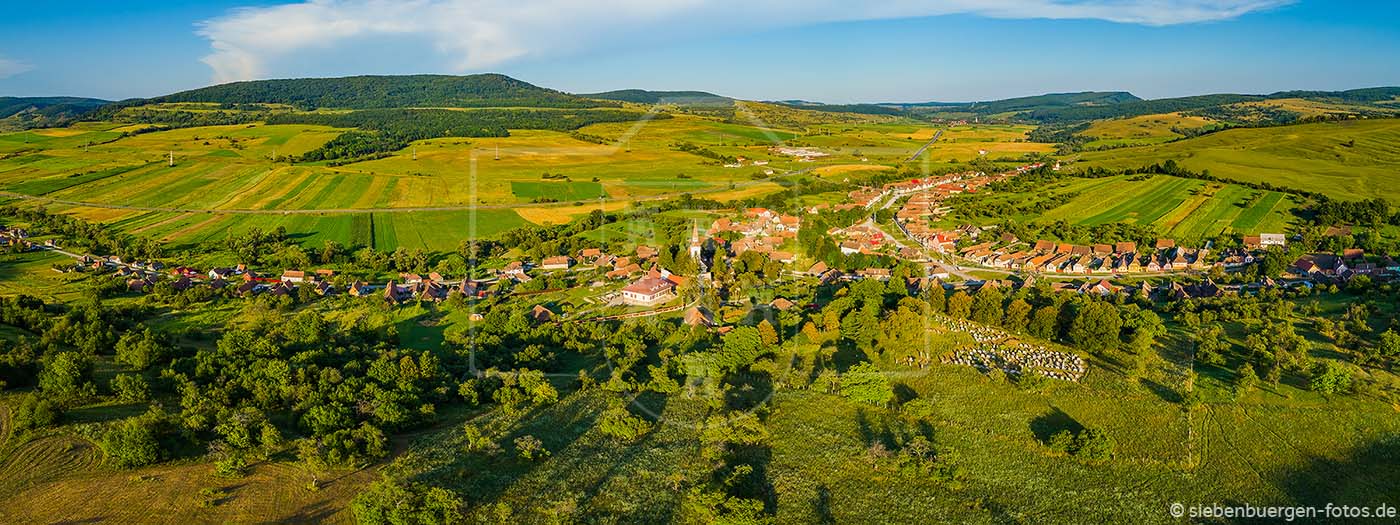
Not only the houses in the village have been restored, but also the church and the parsonage. Within the EU project "18 Kirchenburgen" (2010–2014) the fortified church was renovated, and the parsonage was rebuilt in the Saxon style by the Michael Schmidt Foundation.
Deutsch-Kreuz is the ideal starting point for a journey to discover the Saxon villages with fortified churches, such as Weißkirch (Viscri), Meschendorf (Măieruș), Radeln (Roadeș), and Klosdorf (Cloașterf).
Author:
Zîmța Andreea
Date: 11.05.2018
For photos from Deutsch-kreuz, please click: Photos from Deutsch-kreuz