Studienreise ins Kokeltal
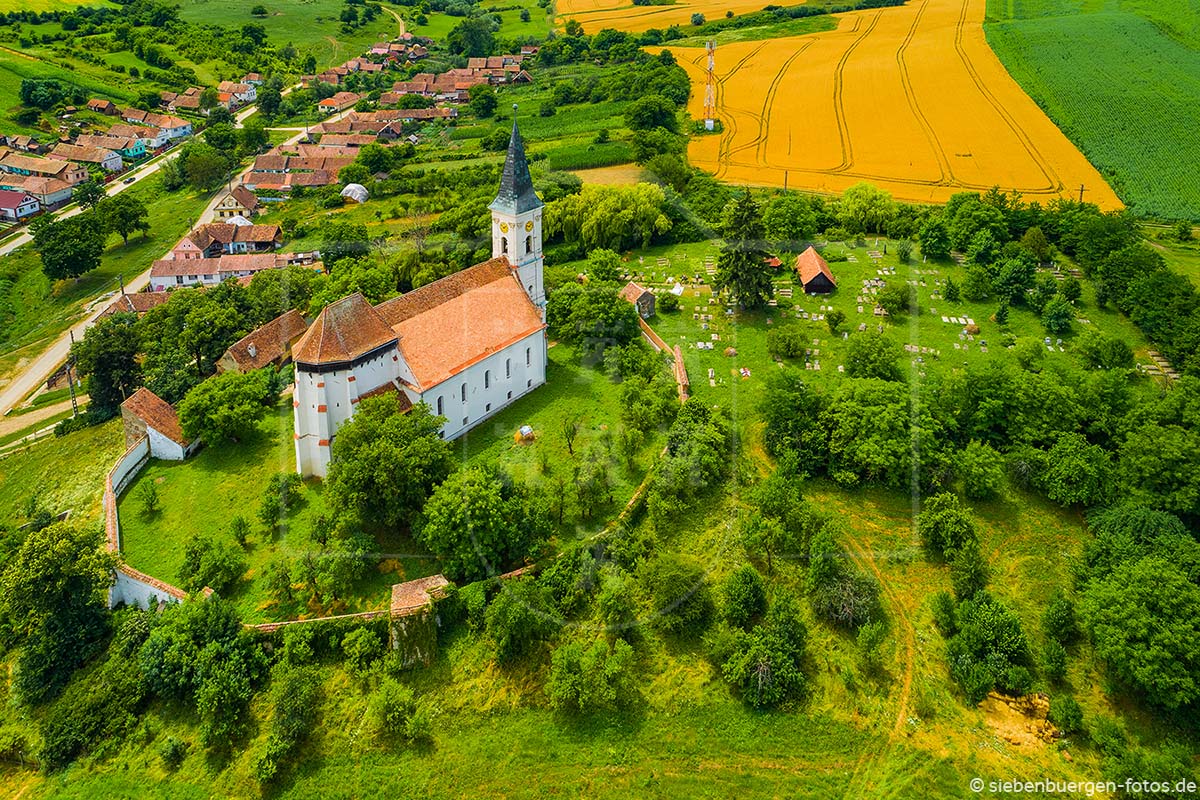
On Saturday, 1 July 2017, six young people from Heltau set out on a small study trip. The purpose of the journey was to gather information about the current state of the fortified churches and communities in Abtsdorf (Țapu), Feigendorf (Micăsasa), Schönau (Șona), Bulkesch (Bălcaciu), Betelsdorf (Sânmiclăuș), Seiden (Jidvei), Michelsdorf (Veseuș) and Taterloch (Tătârlaua).
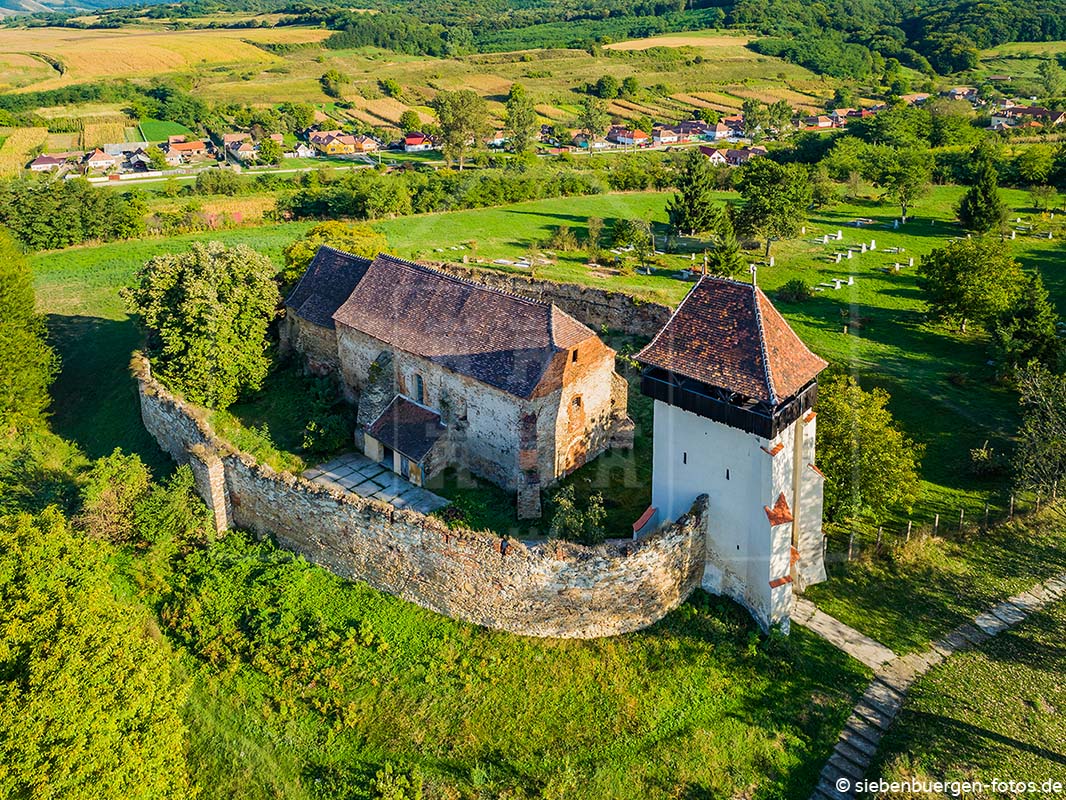
We set off very early in the Gotteswagen (the red community bus) so that we would have time to visit all the villages. Our first stop was in Abtsdorf, a small village in the commune of Feigendorf, Hermannstadt district. After a short breakfast break, we met Mr Hihn, who accompanied us up to the fortified church. Mr Hihn is one of the few emigrated Transylvanian Saxons who still lives in Abtsdorf, but only from spring through to autumn. He spends the winter in Germany with his children. Only two Saxons live in Abtsdorf permanently. From him we learned that the evangelical church was built in the 14th century and only in the 16th century expanded into a fortified church with an oval, high defensive wall, which today is a listed monument. As Mr Hihn strolled with us through the fortified church, he began to speak with a heartbreaking sadness and nostalgia about the times when the church was full of young people and their families, and how difficult it is today to maintain the fortified church and its traditions. With the help of the Homeland Community Organisation, they managed to renovate the gate tower in 2010.
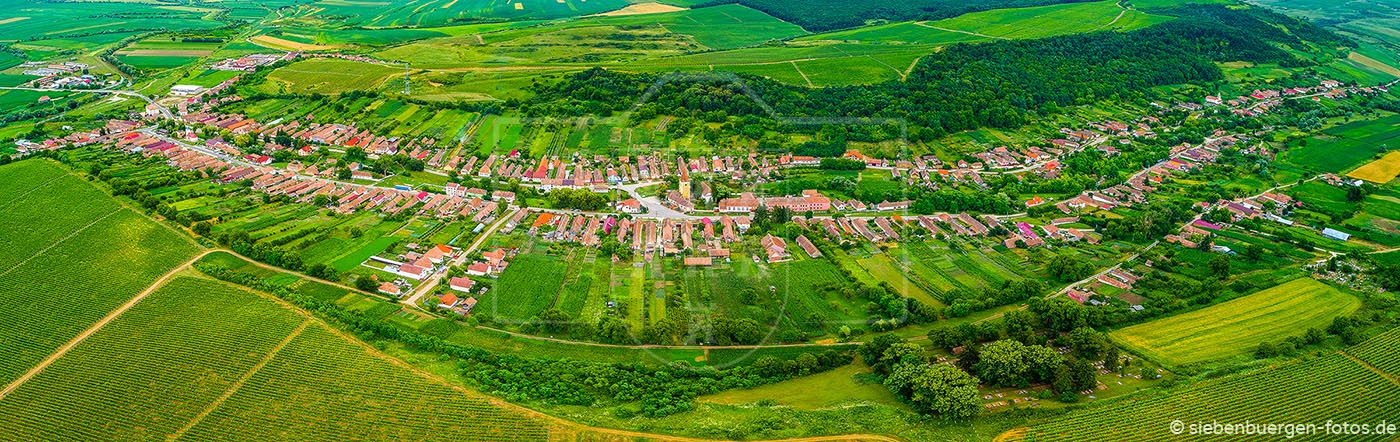
Our next stop was in Feigendorf, where we visited the former evangelical church, which is a listed monument. Today, Roman Catholic parishioners use the chancel and Reformed parishioners use the nave. From a Roman Catholic community member, we learned that it is also difficult for them to maintain their church, because the congregation is constantly shrinking. In Feigendorf, the Governor of Transylvania, Samuel von Brukenthal, had a wine estate, which today unfortunately finds itself in very poor condition, despite being a listed monument.
Our route also led through Schönau, where we could unfortunately only view the church from the outside.
In the area between the two Kokels, in a southern part of the Small Kokel, lies the village of Bulkesch. Here we encountered Mr Curator Friedrich Zikeli, who was very pleased about our visit. The fortified church is in very good condition, as it was renovated through donations and the support of the Homeland Community Organisation. It is definitely worth a visit.
On our way to Seiden, we visited the country estate of Alexius and Georgius Bethlen. The building is representative of Late Renaissance style. It was built on two levels according to the plans of Miklos Bethlen. The south facade is particularly striking, as it contains a double loggia.
At the district road, approximately twenty kilometres north-east of Blasendorf, lies the commune of Seiden. The village is situated in one of the most renowned wine-growing regions of Transylvania. From Mrs Johanna Stoia we learned that there are indications that wine was cultivated here in the time of the Dacians, but it was the Transylvanian Saxons who refined the silver grapes into golden grapes. Church services are still held regularly in the church.
A sad sight greeted us at our next stop, at the evangelical church in Michelsdorf on the Kokel. Although both the church and the bell tower are listed monuments, the chancel of the church has collapsed and the church stands empty. It was once a spiritual centre of the community; today it houses a dog and her puppies.
Our hearts were comforted by good news in the village of Taterloch, in the commune of Kokelburg. The evangelical church and the parsonage are being renovated. The roofs of both buildings have already been renewed, and works on the interior and exterior of the church are to follow. Inside, remains of pre-Reformation frescoes depicting Saint Christopher have been found. Unfortunately we were unable to admire the altar, as it is in Neumarkt am Mieresch until September, where the altar is being restored. From a community member we know that the congregation numbers around 15 Saxons.
We ended our information-rich and exciting day on a hopeful note.
A warm thank you to Bogdan Muntean, who organised this trip.
Author:
Zîmța Andreea
Date: 17.07.2017